The storms that cross Essex in February and March find every weak point in an old garage door. A panel that flexes bangs against its frame all night, a lock that was never turned lets the bottom edge lift, and the gap under a door that no longer sits square lets the rain blow straight across the garage floor. A roller garage door behaves differently in high winds, and this guide explains why, which profile suits an exposed opening, and what to check once the weather has passed.
What Wind Does to a Garage Door
The garage door is usually the largest single surface on the front of a house, and wind treats it as a sail. On an up and over or single-skin door the whole panel takes the load at a few fixing points, so it bows in, springs back and bangs with every gust. Over a winter that loosens the frame fixings, wears the lock and bends the panel, which is why the rattle is louder every year. The pressure does not stop at the door either: a door that moves lets draughts and wind-blown rain past its edges, so the garage is colder and wetter than it needs to be.
Why a Roller Door Holds in High Winds
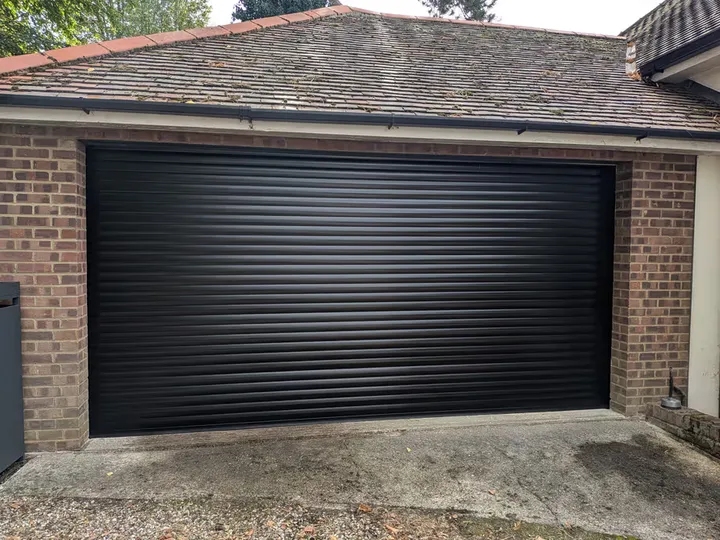
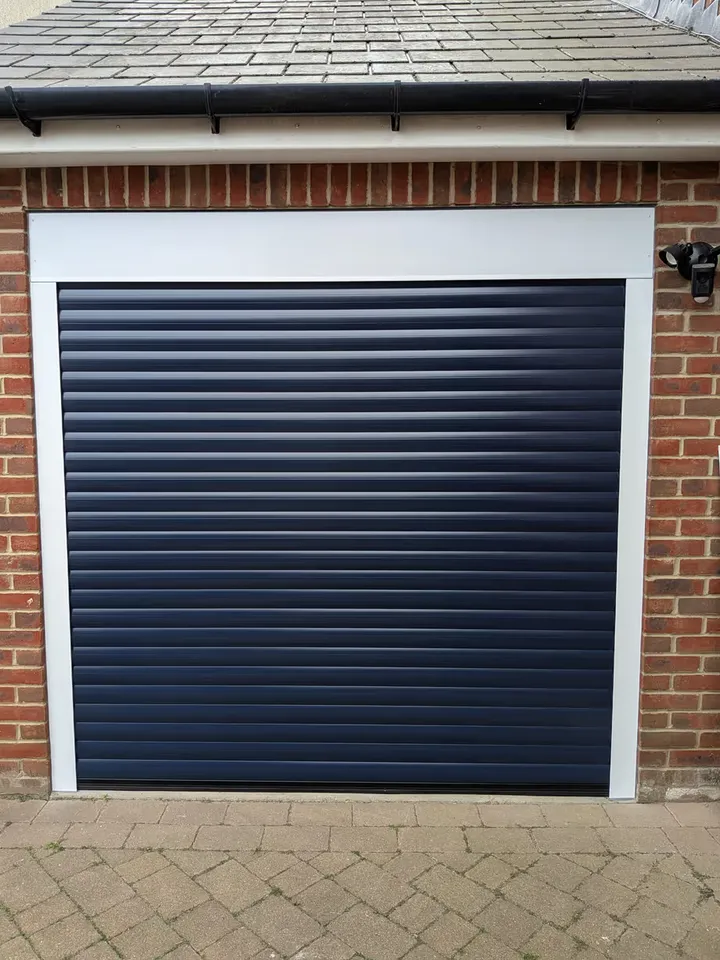
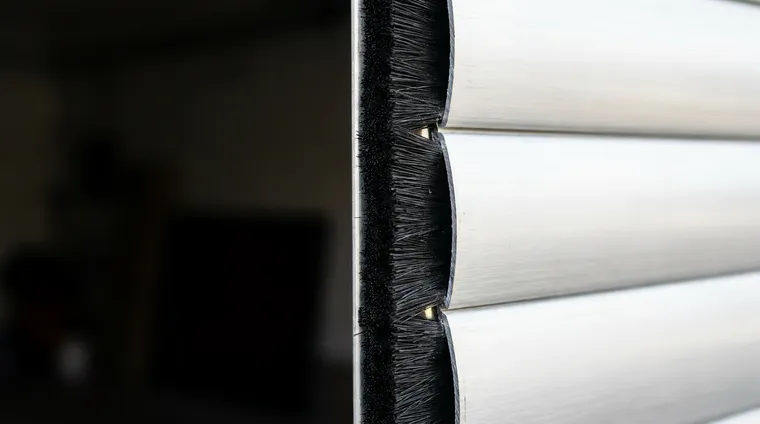
A roller garage door is not one panel. It is a curtain of interlocking aluminium slats that runs in a guide runner on each side of the opening, with a rubber seal along the bottom slat that meets the floor when the door closes. Wind pressing on the curtain pushes the slats into their guides, so the load is spread along the full height of the opening on both sides instead of a handful of fixings. Three details decide how quiet the door stays. The foam core inside each slat damps vibration as the curtain moves, the brush seals in the guide runners cushion the slats, and because every RollRite door is made to measure it fits the opening without the loose play that wind works on. The result is a door that does not rattle in the wind, which is the first thing people notice after a replacement.
Locked Every Time It Closes
The weak point on an old door in a storm is rarely the panel itself; it is the lock that was never turned. An electric roller door removes that from the list. Anti-lift locking engages on its own when the curtain reaches the floor, and the motor holds it there, so the door is locked every time it is closed, with nothing for a gust or a crowbar to lift. Our guide to how secure electric roller garage doors are covers the locking in detail. Leave the door closed through a storm and it is doing exactly what it was designed to do.
The 77mm Door for Wide and Exposed Openings
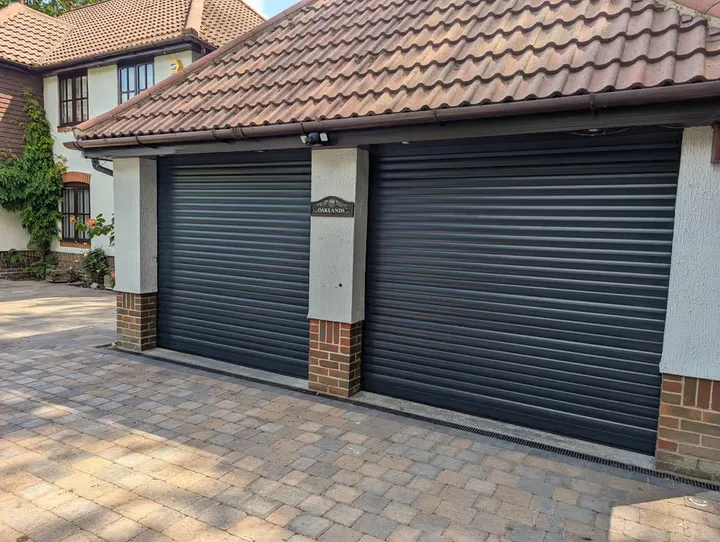
Two slat profiles cover every opening we fit. The 55mm door, with 9mm or 12.5mm insulated slats, suits a single garage up to 2.7 metres wide. The 77mm door uses a thicker 18mm insulated slat that keeps the curtain rigid across a double garage or an exposed single opening up to around 5 metres, and the thicker slat gives better wind resistance. If your garage faces open fields, a coast road or the prevailing wind across an estate, that is the profile to ask about. Our guides to 55mm and 77mm slats and to roller doors for double garages cover the sizes, the box each needs and the fitted prices.
Rain and Weather Coming In
Wind-blown rain gets past an old door at the bottom edge and down the sides. A roller door closes the three routes: the rubber seal on the bottom slat compresses against the floor, the brush seals in the guide runners close the gap at each side, and the curtain rolls into a box above the opening rather than leaving a gap along the top. What a door cannot do is stop water that flows across a drive sloping towards the garage; that is a drainage question, and it is one of the things Steve or Matt look at on the free survey, along with the threshold the new door will close onto.
After a Storm: Five Things to Check
Once the wind has dropped, give the door five minutes before you use it as normal.
- The guide runners. Look along both sides for leaves, grit, twigs or anything the wind has pushed in. Clear what you can see by hand; do not force the door over it.
- The bottom seal. Check the rubber seal along the bottom slat for cuts or anything stuck to it, and sweep the threshold.
- The curtain and the box. Look for dents or scratches from flying debris. Marks on the paint are cosmetic; a slat that is bent is not, and the door should not be run until it has been looked at.
- The power and the remote. Storms trip fuse boards. Check the socket is on and the board has not tripped, then try the remote. Our guide to what happens to an electric roller door in a power cut covers the manual override if the power is still off.
- One full cycle. Open and close the door once and watch it. It should run evenly from top to bottom without a scrape or a pause. If it stops part way, sounds the motor without moving or has come out of a guide, stop using it and ask for advice rather than trying again.
The same checks sit in our monthly roller door maintenance checklist, and the cold weather 60-second check covers the frost and battery problems that arrive with the same weather.
When the Old Door Has Had Enough
A door that rattled through one storm will rattle through the next. If the panel is bowed, the frame fixings have worked loose, the lock no longer holds or the door no longer sits square on its threshold, the honest answer is a replacement rather than another winter of patching. Our guide to whether a garage door needs replacing walks through the signs, and the replacement cost guide sets out what the swap involves.

What a New Roller Door Costs
A RollRite electric roller garage door costs from £1,275 inc VAT fully fitted for the 55mm door with key switch operation, and remote control packages with a safety edge start from £1,475 inc VAT. The 77mm profile for wide, double and exposed openings starts from £1,790 inc VAT. Every price includes the motor, the controls, the manual override, the box, guides and seals, fitting by Steve or Matt, removal of the old door and VAT, and every door carries a 5 year warranty. The roller garage door cost and packages page lists every package, and the cost calculator prices your own opening in a couple of minutes.
Had enough of a door that bangs all night? Book a free survey and we will measure the opening, check the threshold and leave a fixed written quote for a door that stays quiet in the wind.
Book a Free SurveyKey Takeaways
- Wind flexes and bangs a single-panel door; a roller curtain in guide runners spreads the load and stays quiet.
- Foam-filled slats, brush seals and a made-to-measure fit are why a RollRite door does not rattle.
- The 77mm door with 18mm slats is the one for wide and exposed openings.
- After a storm: guides, bottom seal, curtain and box, power and remote, one full cycle.
- A door that bangs in every storm is ready for replacement, from £1,275 inc VAT fully fitted.
Conclusion
A storm is the best test a garage door gets. A door that stays quiet, stays locked and keeps the rain out has passed it; a door that bangs, lifts and leaks has told you what it needs. Make the five checks when the wind drops, and if the answer is a new door, the survey is free and the quote is fixed.